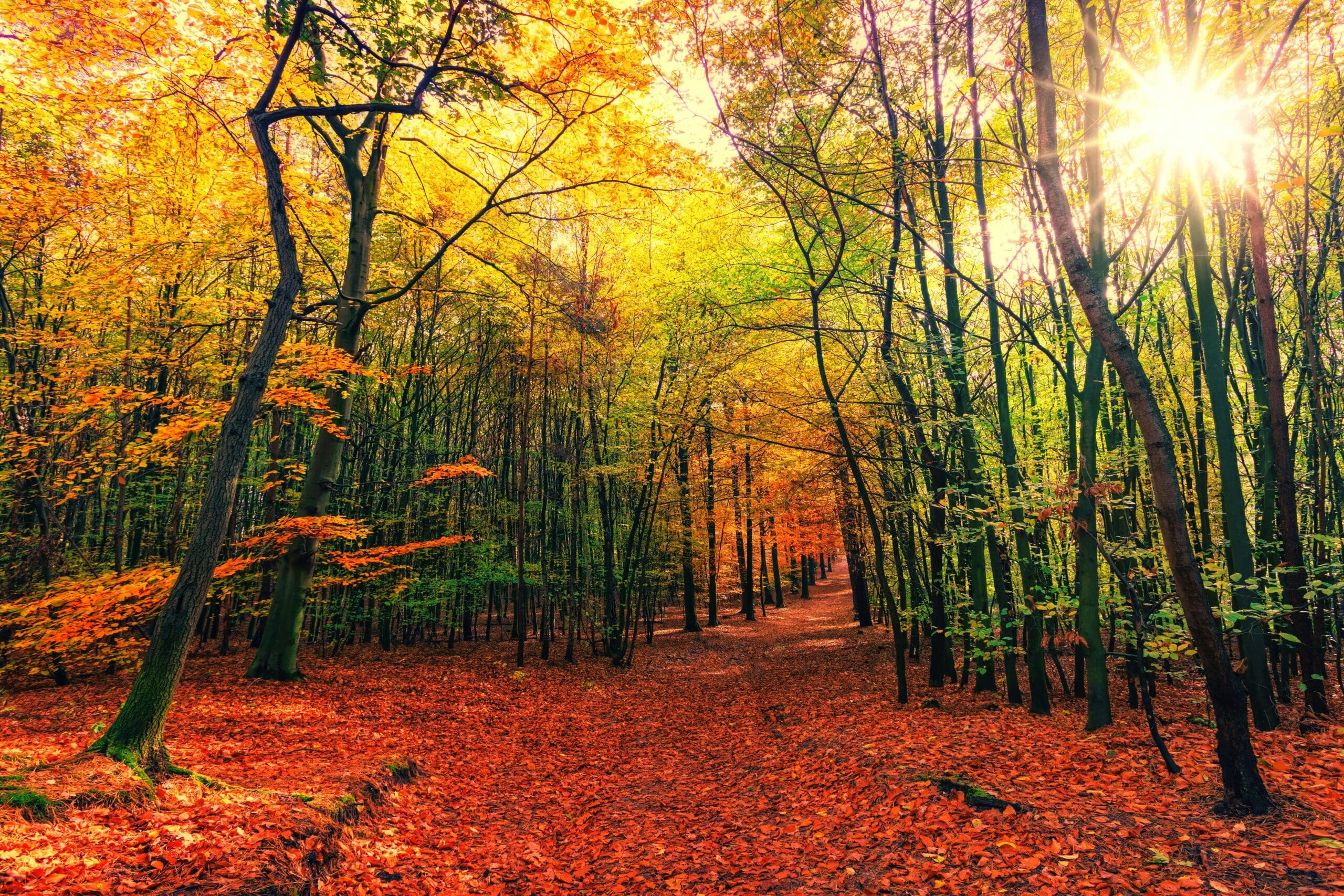
As autumn arrives in the UK, our trees begin to change. Green leaves turn yellow, orange, red and brown before eventually falling to the ground. While this is one of the most noticeable signs of autumn, there is much more happening inside a tree as it prepares for the colder months.
Understanding how trees change during autumn can help homeowners recognise what is normal and identify potential tree health problems before winter arrives.
Why Do Trees Lose Their Leaves in Autumn?
One of the biggest changes to trees in autumn is the loss of leaves.
Throughout spring and summer, deciduous trees use their leaves to carry out photosynthesis. The green pigment in leaves, known as chlorophyll, helps trees absorb sunlight and produce the energy they need to grow.
As the days become shorter and temperatures drop, trees begin preparing for winter. They produce less chlorophyll, causing the green colour to disappear and revealing other pigments within the leaves.
This creates the familiar autumn colours before the leaves eventually fall from the tree.
Leaf fall is a completely natural process and is an important part of the tree’s seasonal cycle.
Why Do Leaves Change Colour?
Autumn leaves can appear in a range of colours, depending on the tree species and weather conditions.
Yellow and orange colours come from pigments called carotenoids, which are present in leaves throughout the growing season. They become more visible when the green chlorophyll breaks down.
Some trees also produce red and purple pigments called anthocyanins. The amount of sunlight, temperature and moisture can all influence how vibrant autumn foliage becomes.
This means that the colour and timing of leaves can vary from year to year.
How Do Trees Prepare for Winter?
As well as losing their leaves, trees make several changes to conserve energy during the colder months.
Growth slows down and the tree reduces some of its activity above ground. Energy and nutrients are stored within the tree and its root system, ready to support new growth when spring arrives.
Although a deciduous tree may appear dormant during winter, its roots can remain active beneath the soil.
Evergreen trees, including species such as holly and yew, behave differently. They retain their foliage throughout the year, although individual older leaves or needles can still be shed.
Is Autumn a Good Time to Check Your Trees?
Autumn can be a useful time to inspect the trees around your property. As leaves begin to fall, the structure of deciduous trees becomes much easier to see.
Look out for signs such as:
Strong autumn winds and heavy rainfall can also put additional stress on trees and branches. Identifying problems before the worst of the winter weather arrives can help reduce the risk of damage.
If you notice a concern with a tree, a qualified tree surgeon can assess its condition and advise whether any work is required.
Does Autumn Mean Trees Need Pruning?
Not necessarily. The best time to prune a tree depends on its species, health and the reason for pruning.
While some tree work can be carried out during autumn, pruning should not be undertaken simply because the leaves have fallen. Removing too many healthy branches can negatively affect a tree, so any pruning should have a clear purpose.
It is also important to check whether a tree is protected by a Tree Preservation Order (TPO) or is located within a conservation area before carrying out work. Permission may be required in certain circumstances.
Frequently Asked Questions About Trees in Autumn
Why do trees lose their leaves in autumn?
Deciduous trees lose their leaves as part of their natural preparation for winter. Shorter days and cooler temperatures cause the tree to stop producing as much chlorophyll, eventually resulting in the leaves changing colour and falling.
Should trees be pruned in autumn?
Some trees can be pruned in autumn, but there is no single pruning season that is suitable for every tree. The correct timing depends on the tree species, its condition and the reason for pruning.
How can I tell if my tree is unhealthy in autumn?
Look for signs such as dead branches, cracks, decay, fungal growth, unusual leaning or significant changes in the tree’s condition. If you are concerned, a professional tree assessment can help identify problems.
Can autumn weather damage trees?
Strong winds, heavy rain and storms can increase the risk of branches breaking, particularly where trees already have dead, damaged or weak branches. Checking trees before winter can help identify potential issues.
Need Advice About Your Trees?
If you have concerns about a tree on your property or are considering tree work, Artemis Tree Services can help. Our experienced team provides professional tree care and advice for domestic and commercial properties across Hertfordshire, Buckinghamshire, Berkshire, Middlesex and London.
Get in touch with us today to discuss your tree care needs.