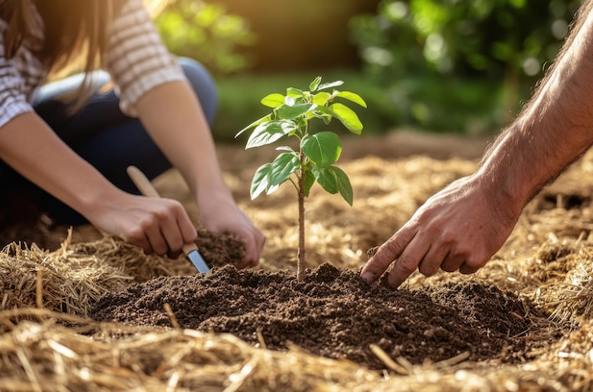
Tree planting is one of the best ways to enhance a property, but without professional planning it can lead to expensive and dangerous problems in the future. At Artemis Tree Services, our professional tree planting services focus on correct placement, special selection, and long-term tree health to protect both your landscape and your property.
Survival Rates Depend on Planting Method
Studies of urban and rural tree planting projects show that a significant percentage of newly planted trees die within the first few years. The most common causes are:
Correct planting depth, root inspection, and soil preparation greatly increase survival rates and long-term stability.
Roots Grow Near the Soil Surface
Contrary to popular belief, most tree roots grow in the top 30–60 cm of soil where oxygen, moisture, and nutrients are available. Compacted soil, heavy machinery, or paved surfaces restrict root growth and reduce anchorage.
Healthy root systems require:
Without these conditions, trees are more vulnerable to drought stress and windthrow.
Species Selection Determines Long-Term Success
Different tree species vary widely in their tolerance to drought, flooding, pollution, wind, and temperature extremes. Planting species that are poorly suited to local conditions often results in slow growth, pest problems, and early decline.
Effective species selection considers:
Native species often support local wildlife more effectively, but well-adapted non-native species can also provide important ecosystem services when carefully selected.
Spacing and Placement Prevent Future Conflicts
Trees planted too close together or near buildings, roads, and underground utilities frequently require heavy pruning or removal later. This not only increases maintenance costs but also weakens tree structure and shortens lifespan.
Proper spacing accounts for:
Planning for mature size is essential, not just the tree’s appearance at planting.
Soil Quality Drives Growth and Stability
Healthy soil contains organic matter, microorganisms, and air spaces that support root development. Construction and landscaping often leave soil compacted and biologically depleted, limiting root growth and nutrient uptake.
Soil improvement techniques may include:
Long-term tree performance is strongly linked to soil condition at planting.
The First Three Years Are Critical
Most tree establishment occurs during the first two to three years after planting. During this period, roots are still expanding into surrounding soil and cannot yet fully support the canopy.
Essential early-stage care includes:
Trees that receive proper early care are far more likely to reach maturity and provide long-term benefits.
Tree Planting and Climate Change: Benefits and Limits
Trees absorb carbon dioxide and store carbon in wood and soil, but carbon benefits accumulate slowly over time. A newly planted tree may take decades to reach peak carbon storage capacity.
Additionally:
For climate strategies, tree planting is most effective when combined with forest conservation and habitat restoration.
Tree Planting as Long-Term Infrastructure
Well-managed urban and rural trees function as living infrastructure by:
However, these benefits only occur when trees are healthy, well-placed, and allowed to reach maturity.
Tree planting delivers real environmental and community benefits only when it is planned and managed for long-term success rather than treated as a one-off activity. Research shows that survival, stability, and ecosystem value depend on choosing suitable species, preparing healthy soil, allowing space for mature growth, and providing consistent care during the first critical years. Focusing on quality over quantity, and combining new planting with protection of existing trees, produces far greater and longer-lasting results for climate resilience, biodiversity, and urban liveability.
At Artemis Tree Services, we are proud to provide professional, reliable, and eco-friendly tree care for our community. We are committed to planting and protecting trees to create greener, healthier, and more beautiful spaces. When you choose us, you are choosing quality service, environmental responsibility, and a better future for the next generation. At Artemis Tree Services, we don’t just care for trees — we care for your environment.