
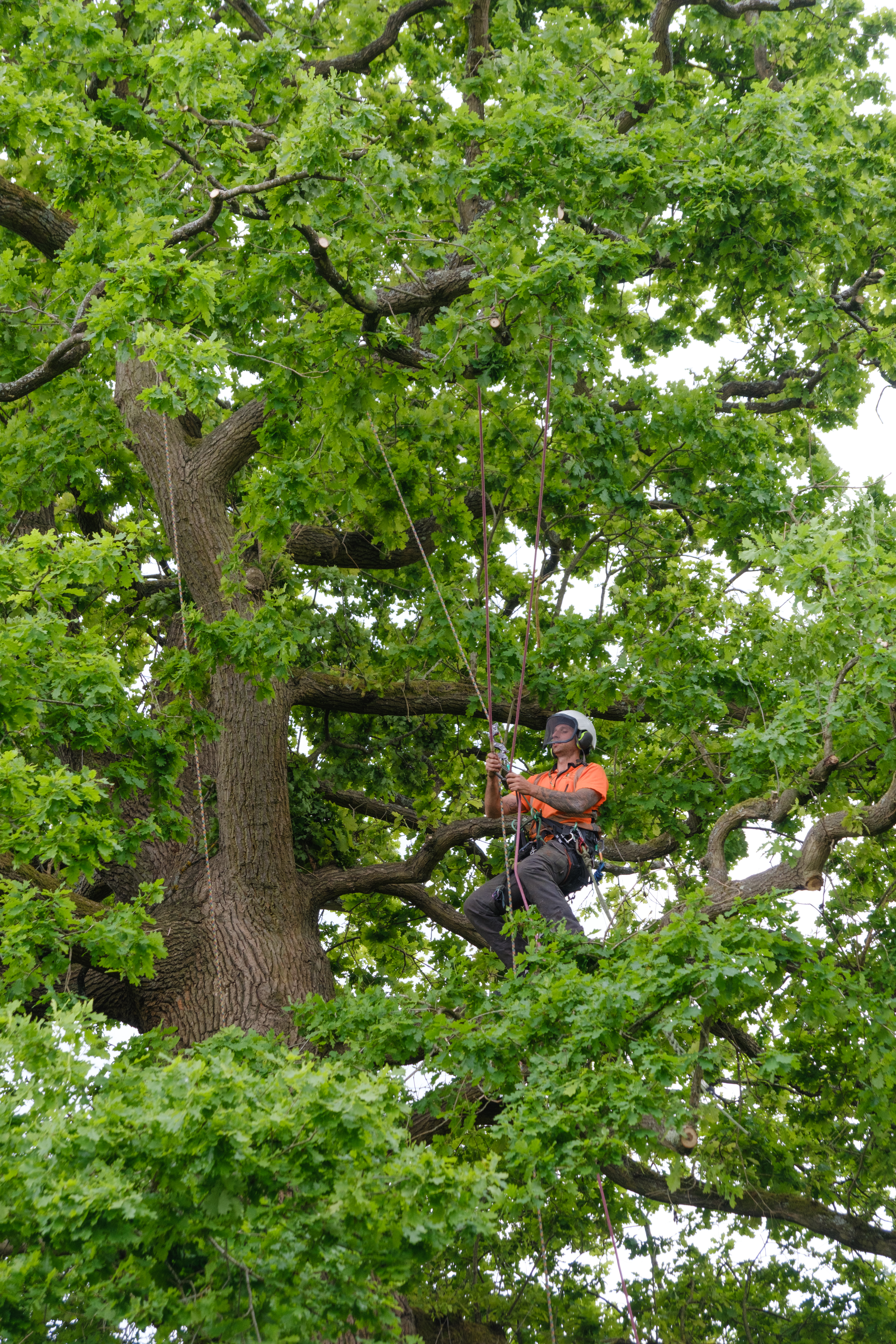
Trees are an important part of any garden or outdoor space, but sometimes they need a little maintenance to keep them healthy, safe and looking their best. There are several types of tree pruning, each with a different purpose. Three of the most common are crown reduction, crown thinning and crown lifting.
Although these terms are often used together, each technique involves a different approach to managing a tree’s size, shape and growth. Understanding the differences can help you decide which type of tree work is most suitable for your property.
At Artemis Tree Services, our experienced tree surgeons carry out a range of tree pruning services for domestic and commercial customers. In this article, we explain what each technique involves and when it might be needed.
What Is Crown Reduction?
Crown reduction involves reducing the overall size of a tree’s crown by carefully shortening selected branches. The aim is to reduce the tree’s height and/or spread while maintaining its natural shape and structure.
This type of tree pruning may be suitable when a tree has outgrown its space, is extending too close to a building or is becoming too large for its surroundings. Crown reduction can also help manage the tree’s size while allowing it to remain an important feature of the garden.
During a crown reduction, branches are pruned back to suitable growth points rather than simply cutting across the ends of branches. This helps maintain the tree’s natural appearance and encourages appropriate regrowth.
Crown reduction may be suitable when:
What Is Crown Thinning
Crown thinning involves selectively removing a proportion of smaller branches throughout the crown to reduce its density. Unlike crown reduction, it does not usually aim to reduce the overall height or spread of the tree.
The main purpose of crown thinning is to create a more open crown while retaining the tree’s natural shape and size. By carefully selecting which branches to remove, a tree surgeon can improve the distribution of foliage throughout the crown.
Crown thinning may also allow more light to pass through the canopy and into the surrounding garden. However, the amount of additional light will depend on the tree and its location.
Crown thinning may be suitable when:
Crown thinning should always be conducted carefully. Removing too much foliage can place unnecessary stress on a tree, so the amount removed should be appropriate for its species, condition and circumstances.
What Is Crown Lifting?
Crown lifting involves removing selected lower branches to increase the clearance beneath a tree’s canopy. Unlike crown reduction and crown thinning, the focus is on the lower part of the tree rather than reducing the upper crown.
This technique can be particularly useful where low-hanging branches are obstructing pathways, driveways, access routes or areas of a garden.
Crown lifting can improve access and make outdoor spaces easier to use, while maintaining the tree’s natural height and overall shape.
Crown lifting may be suitable when:
The amount of crown lifting required will depend on the tree’s structure, location and intended use of the surrounding space. Removing too many lower branches can affect a tree’s balance and appearance, so it is important to use an appropriate pruning method.
What Is the Difference Between Crown Reduction, Thinning and Lifting?
Although all three techniques involve pruning a tree, the main difference is what each one aims to achieve.
The right technique will depend on the tree, its condition and what you want to achieve. In some cases, a combination of pruning techniques may be appropriate, provided the work is suitable for the tree.
A professional assessment can help determine the best approach while protecting the tree’s long-term health and natural structure.
Do You Need Permission for Tree Pruning?
Before arranging tree work, it is important to check whether any restrictions apply to your tree.
If your tree is protected by a Tree Preservation Order (TPO) or is located within a conservation area, you may need permission or to follow the relevant notification process before carrying out pruning work.
The requirements depend on the circumstances, so it is always best to check with your local planning authority before work begins. At Artemis Tree Services, we can help advise you on the process, including TPO applications where required.
It is also important to consider wildlife before scheduling tree work. Birds may be nesting in trees and hedges throughout the year, so suitable checks should be carried out before pruning begins.
Professional Tree Pruning by Artemis Tree Services
Whether you need to reduce the size of an overgrown tree, thin a dense crown or lift low-hanging branches, choosing the right pruning technique is important.
At Artemis Tree Services, we provide professional tree surgery for domestic and commercial customers across Rickmansworth, London and the surrounding areas. Our experienced team can assess your trees, discuss your requirements, and recommend suitable work to help maintain their health, structure, and appearance.
If you’re looking for professional tree pruning, contact Artemis Tree Services today to discuss your requirements and arrange a quotation. Our team is happy to help with your tree care needs.

