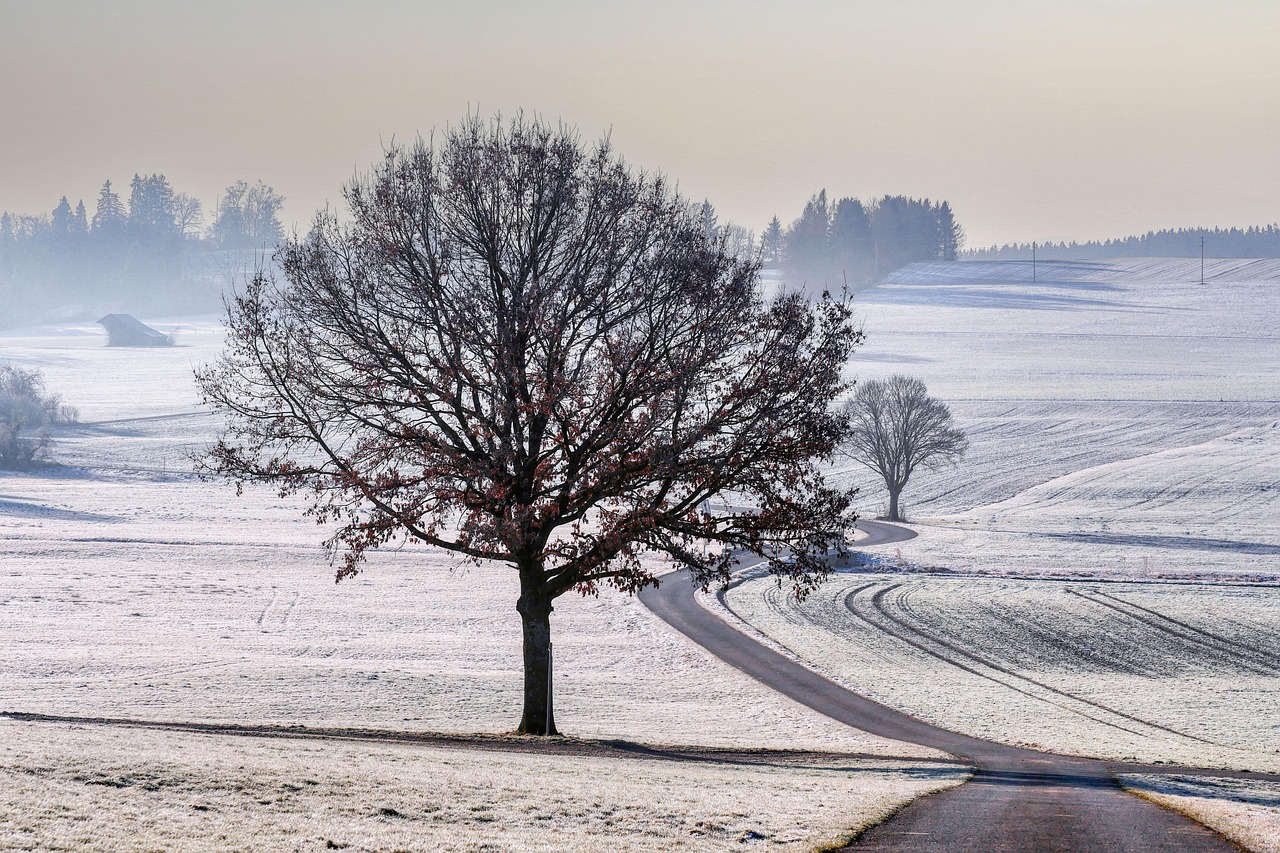

Understanding how trees cope with freezing temperatures is important for planning winter tree care and long term tree management. In the UK, where frosts and cold snaps are common, knowing what is happening inside a tree helps you decide when to prune, protect or remove it.
If you need practical help managing trees through winter across London and the Home Counties, the qualified arborists at Artemis Tree Services can advise, maintain and, where necessary, safely remove or replace problem trees.
As days shorten and temperatures fall, many trees enter dormancy. This is a controlled reduction in growth and metabolism.
This dormant phase makes winter an appropriate time for a lot of planned work, such as tree cutting, pruning and lopping or tree maintenance, because stress on the tree can be lower and there is no impact on spring leaf flush.
Inside the tree, cells adjust their chemistry to cope with freezing temperatures. As winter approaches, many species increase the concentration of:
These compounds act as cryoprotectants. They lower the freezing point of water in the cells and help control how and where ice forms. This reduces the risk of ice crystals rupturing cell membranes and damaging living tissues such as the cambium and buds.
For long lived trees in built environments, repeated freeze–thaw cycles can still cause damage. Regular inspections and, where appropriate, tree reports and surveys help identify weaknesses before they become safety issues.
Another key response to freezing conditions is controlled dehydration.
Trees move water from inside their cells into the spaces between cells. This has two main effects:
Combined with higher solute concentrations, this strategy allows many hardy tree species to tolerate temperatures well below 0°C without widespread tissue death.
The structure of the trunk and branches also contributes to winter survival.
Where there are signs of cracking, decay or previous storm damage, it can be worth arranging a professional assessment. Techniques like tree decay detection – Resistograph can help determine if a tree has weakened internally and is more likely to fail during winter weather.
Some tree tissues can supercool. This means water in the cells remains liquid below its normal freezing point because there are no suitable nucleation sites for ice to start forming.
In favourable conditions, supercooled tissues can stay unfrozen at temperatures as low as around minus 40°C. This is more common in small structures such as buds and some fine twigs. Once ice does nucleate, however, damage can be rapid, which is why sudden harsh frosts after mild spells are particularly risky.
Roots are critical for water and nutrient uptake, so protecting them is essential.
On sites with valuable or mature trees, structured tree estate management can help balance soil care, drainage and access so that roots remain healthy through winter and beyond.
These natural survival mechanisms mean most healthy trees cope well with typical UK winters. Problems usually arise when:
In these cases, professional intervention can reduce risk and prolong the life of the tree where possible.
Artemis Tree Services provide a full range of services, including:
For homeowners and commercial clients across London and the Home Counties, their tree surgeons can advise on the most appropriate winter and pre winter work for each site.
Understanding how trees survive freezing temperatures is only part of the picture. Putting that knowledge into practice on real sites requires experience, the right equipment and awareness of UK guidance and local authority requirements.
If you would like advice on winter tree safety, pruning, planting or removal, you can: